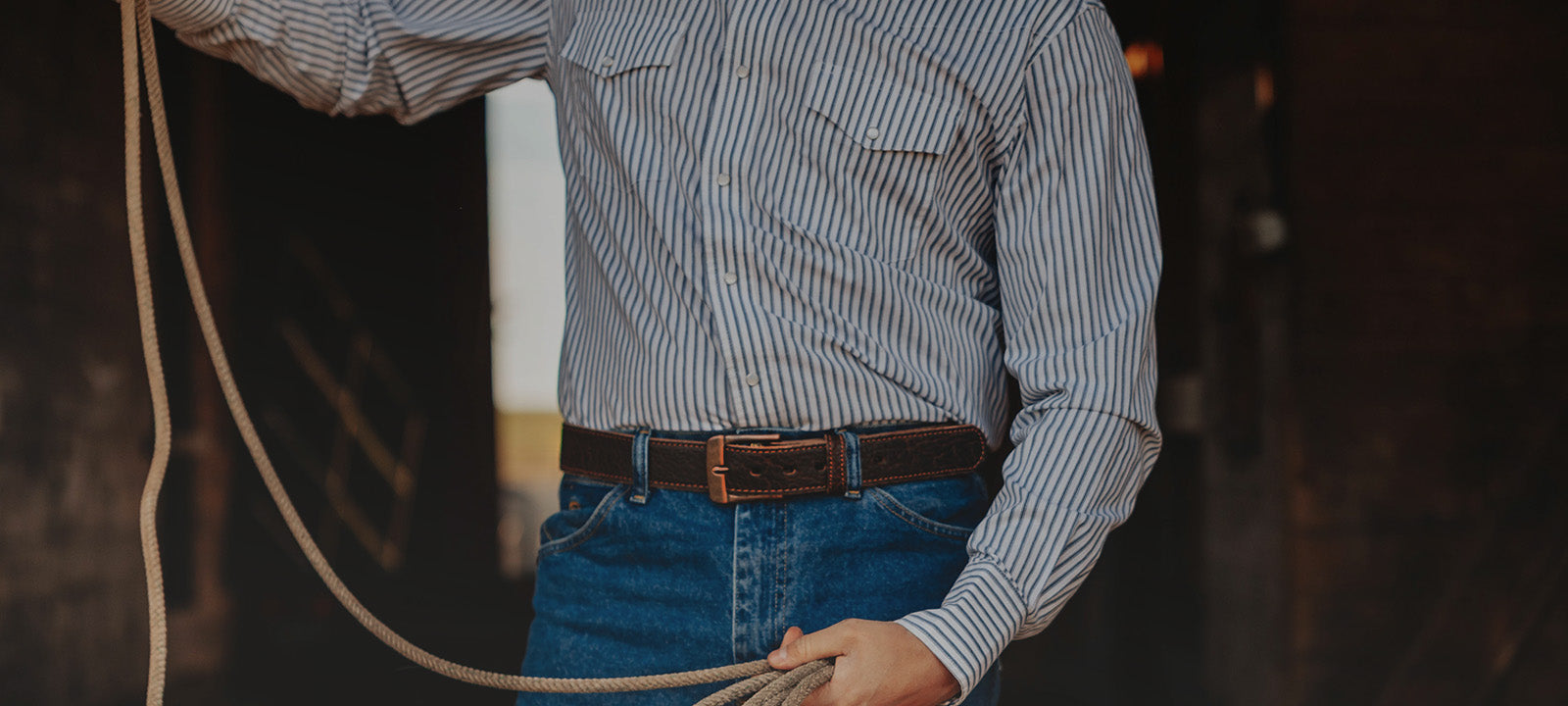


There's something deeply satisfying about a well-worn leather belt that's been with you for years. The way it softens in just the right places, how it develops that rich, burnished color that can't be faked or rushed. That kind of character doesn't happen by accident. It's the result of quality craftsmanship meeting proper care, and it's exactly what separates a throwaway accessory from something worth keeping.
At Hanks Leather Goods, we've been crafting American-made leather goods for over 75 years, and we've learned a thing or two about what makes leather last. A quality belt or wallet represents more than just a purchase. It's an investment in something that should outlive trends and serve you faithfully for decades. But here's the truth: even the finest full-grain leather needs attention. Treat it right, and it rewards you with years of reliable service and a patina that tells your story. Neglect it, and you're missing out on everything that makes leather special in the first place.
This guide will walk you through the essentials of leather care, from understanding why it matters to the practical steps that keep your gear looking sharp and performing well. Whether you're breaking in a new belt or maintaining a favorite wallet that's been in your pocket for years, these principles apply.
- Quality leather improves with age — but only when it’s maintained.
- Clean first, then condition — conditioning over grime seals in dirt.
- Use light, consistent applications — too much product causes buildup.
- Air-dry wet leather naturally, then recondition to restore lost oils.
Why Caring For Leather Matters
Leather is one of those rare materials that actually improves with age when properly maintained. Unlike synthetic alternatives that crack, fade, and fall apart after a season or two, quality leather develops character over time. That warm patina, those subtle variations in color and texture... they're the visible proof of craftsmanship and care working together.
That beautiful aging process only happens when leather gets the attention it deserves.
Without regular care, even the best full-grain leather will dry out, lose its suppleness, and eventually crack. The natural oils that give leather its durability and flexibility need to be replenished.
There's also something to be said for taking pride in your belongings. In a world where most things are designed to be replaced rather than repaired, maintaining your leather goods is a small act of rebellion. It's choosing quality over convenience, longevity over disposability. When you take ten minutes to clean and condition a belt that's been with you for five years, you're not just preserving leather. You're honoring the craftsmen who made it and the investment you made in choosing something built to last.
The financial aspect matters too. A well-made leather belt from Hanks isn't cheap, and it shouldn't be. But when you factor in proper care, that belt will outlast a dozen cheaper alternatives. You're looking at decades of use versus months. The math is simple, but it requires a shift in thinking from buying something to use until it breaks to acquiring something to maintain and keep.
Step By Step: Cleaning And Conditioning Basics
Caring for leather doesn't require hours of work. What it does require is consistency and the right approach. Here's how to keep your belts and wallets in top condition using our Leather Preserving Kit.
What You'll Need
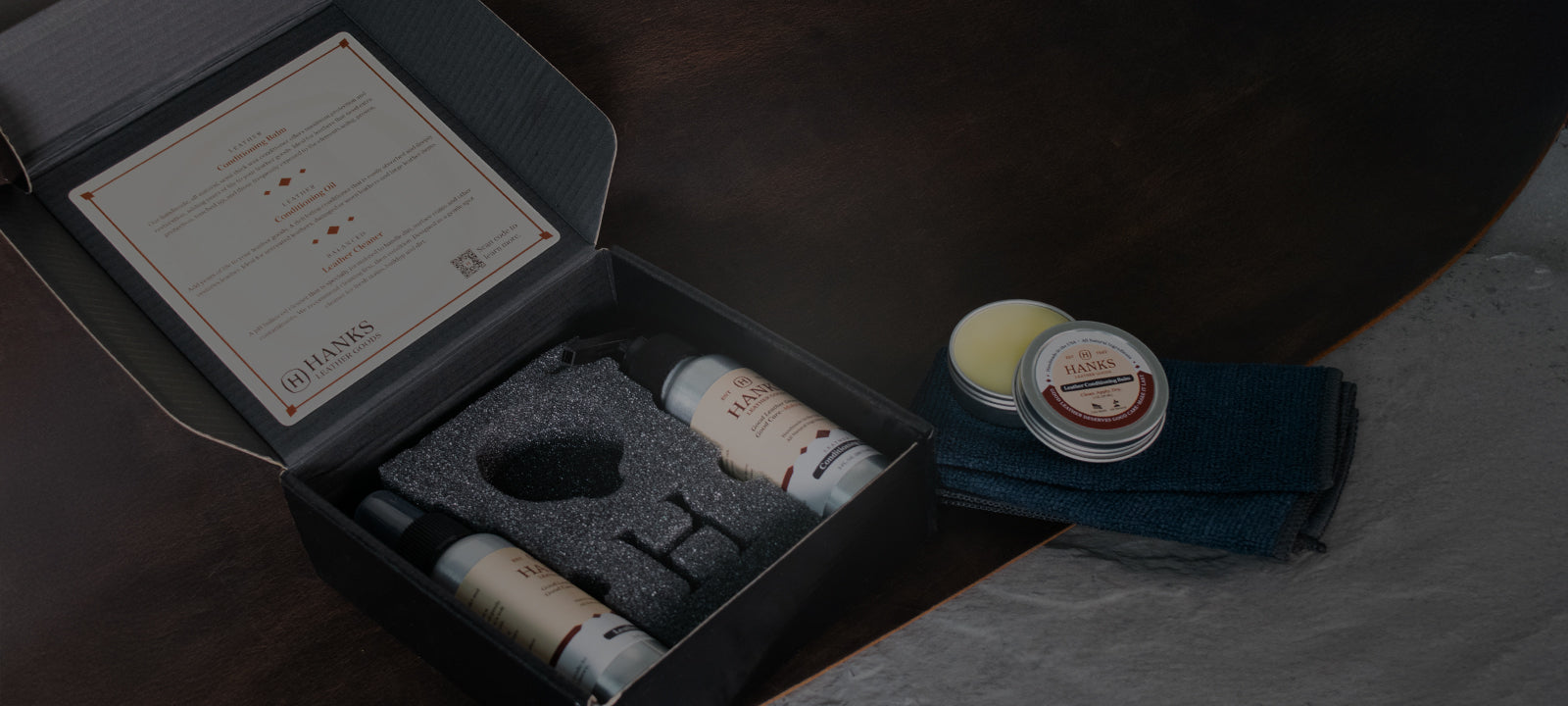
Our Leather Preserving Kit gives you everything in one place:
- 3 oz. pH Balanced Leather Cleaner – gently removes dirt, buildup, and surface stains
- 3 oz. Conditioning Oil – deeply absorbs to rehydrate and revive
- 1 oz. Conditioning Balm – semi thick wax formula for protection and restoration
- Microfiber Cloth – for easy application and buffing
All handmade in the USA with all natural ingredients.

Cleaning Your Leather
Start by removing any loose dirt or dust. For belts and wallets, a quick wipe with the included microfiber cloth usually does the trick. Don't skip this step. Conditioning leather without cleaning it first just seals in the grime.
Once the surface is clear, apply a small amount of our pH Balanced Leather Cleaner to the damp cloth (not directly to the leather). Work in small sections using gentle circular motions to lift dirt and oils without saturating the material.
Pay attention to high wear areas: on a belt, that's usually around the buckle and the holes you use most often. On a wallet, it's the edges and corners where the leather rubs against fabric and surfaces.
After cleaning each section, wipe away any residue with a clean, slightly damp cloth. Then let the leather dry completely before conditioning, at least an hour, longer in humid conditions. Wet or damp leather won't absorb conditioner properly.
Conditioning For Longevity
Conditioning is where the magic happens. This is what keeps leather supple, prevents cracking, and brings out that rich color that makes quality leather so appealing.
How often? A belt you wear daily in a dry climate might need conditioning every month or two. A wallet that stays in your pocket might only need it quarterly. Good rule of thumb: if the leather looks dull or feels stiff, it's time.
Using The Conditioning Oil
Apply a small amount of our Conditioning Oil to the microfiber cloth and work it into the leather using circular motions. This deeply penetrating formula rehydrates leather from within. Don't overdo it. A little goes a long way. You want the leather to absorb the product, not sit on top of it.
Work methodically across the entire surface, paying special attention to areas that bend most often, as these spots dry out faster. Let the oil sit for about fifteen minutes so the leather can fully absorb it, then buff away any excess with a clean cloth.
Sealing With Conditioning Balm
For extra protection or to revive older leather, follow up with our Conditioning Balm. This semi thick wax formula seals in moisture and creates a protective barrier against the elements.
Apply a thin layer with your cloth, working it into the leather with circular motions. The balm is especially effective on high stress areas and leather that's been neglected. After application, buff to a subtle sheen with a clean section of the microfiber cloth.
Special Considerations
If your leather gets wet, don't panic. Blot away excess water with a clean cloth and let it air dry naturally. Never use direct heat like a hair dryer or radiator, as this can cause the leather to crack or warp. Once it's completely dry, condition it with our Conditioning Oil to replace any oils that were lost.
For stubborn stains, resist the urge to scrub aggressively. A gentle approach with our Leather Cleaner and patience usually does the trick.
Common Mistakes That Ruin Good Leather
Even with the best intentions, it's easy to damage leather if you don't know what to avoid. Here are the mistakes that cause the most damage and how to avoid them.
Over Conditioning
If a little conditioning is good, more must be better, right? Wrong. When you apply too much conditioner or oil, it can't absorb it all. The excess sits on the surface, creating a sticky, greasy layer that attracts dirt and dust.
The fix: Use less product and condition less frequently. A thin, even layer every few months is plenty for most leather goods. Think of leather like your skin. You wouldn't slather on lotion five times a day.
Heat Drying Wet Leather
This is one of the fastest ways to destroy leather. Heat causes leather to dry too quickly, making it brittle and prone to cracking. The natural oils evaporate, the fibers contract unevenly, and you're left with stiff, damaged leather.
The right approach: When leather gets wet, blot away moisture with a clean cloth and let it air dry at room temperature, away from heat sources. This might take a full day or longer. Once completely dry, condition it to restore lost oils.
Ignoring Leather Until It's Too Late
Sometimes the biggest mistake isn't what you do to leather, but what you don't do. A belt worn daily and never conditioned will eventually develop cracks and stress points. A wallet that's never cleaned will accumulate grime that breaks down the fibers.
Don't wait until you see cracks. By that point, you're doing damage control instead of maintenance.
Using Leather In Extreme Conditions Without Protection
Leather is durable, but it's not invincible. Leaving a leather belt in a hot car all summer, or storing leather goods in a damp basement are recipes for damage. Direct sunlight, extreme heat, and prolonged moisture exposure can all shorten leather's lifespan significantly.
Be practical: Store leather goods in a climate controlled environment when not in use. Avoid leaving them in direct sunlight for extended periods. If you know your leather will face harsh conditions, prepare it with our Conditioning Balm for extra protection.
The Hanks Difference
Quality leather goods start with quality materials and craftsmanship, but they reach their full potential through proper care. Every belt, wallet, and accessory we craft at Hanks Leather Goods is designed with longevity in mind. We use full-grain leather because it's the strongest, most durable option available. We build everything here in America because we believe in supporting skilled craftsmen and maintaining standards that matter.
But even the best materials need care. When you invest in a Hanks belt or wallet, you're making a choice. You're choosing to own fewer things of higher quality. You're choosing to be someone who maintains their belongings rather than replacing them.
Want to make leather care simple?
Your leather tells a story. With the right care, you can make sure it's a story worth telling for years to come.