

Key Takeaways
-
You can buy an American-made, full-grain leather belt for under $100 without waiting for a sale.
-
For casual comfort, consider the Hanks Crazy Horse at $80. For a more substantial everyday belt, compare the Everyday and Gunner, both $89.
-
Match the belt to what you actually do. Holding up jeans and carrying equipment call for different levels of support.
-
Look beyond the price tag. Leather construction, fit, replaceable hardware, and warranty coverage all affect value.
-
Measure before ordering. Your pants size alone is not enough to choose the right Hanks belt size.
You shouldn't have to become a leather expert just to buy a decent belt. You want something that fits, feels comfortable, and still looks good after you've worn it more than a handful of times.
Keeping the price under $100 is reasonable, too. At Hanks Belts, we have American-made options within that budget, and choosing between them comes down to how you spend your day.
Start with your needs, then compare the construction. The thickest belt isn't automatically your best choice, and spending your entire budget isn't necessary if a less expensive option suits you better.
Here's how we'd help you narrow it down.
What Should You Expect From a Leather Belt Under $100?
Within this budget, you can reasonably look for clearly identified leather, straightforward construction, solid hardware, and enough product information to understand what you're buying.
“Premium” on its own doesn't tell you much. A useful description should identify the leather type, explain the strap construction, and give you actual dimensions. You should also be able to find out where the belt is made and whether the buckle can be changed.
Pay attention to what's missing. If a listing gives you several paragraphs about style but never explains the material, you'll have a harder time judging its suitability for daily wear.
You don't need every possible feature. Someone looking for a relaxed weekend belt may have little interest in extra rigidity. Someone wearing a utility pouch will care much more about support.
Before comparing prices, ask yourself what disappointed you about your last belt. Was it uncomfortable? Did the buckle bother you when sitting? Were you constantly tightening it? Those answers give you a more useful shopping checklist than a vague promise of quality.
Start With How You Wear Your Belt
Think about an ordinary Tuesday. Are you sitting at a desk, driving between appointments, working on your feet, or moving between all three?
If your belt mainly holds up jeans, flexibility and buckle comfort deserve plenty of attention. A belt can be durable without feeling especially heavy around your waist.
Carry something on it regularly? That changes the conversation. A multitool sheath or other belt-mounted accessory adds a demand that a purely casual belt may not be designed to handle. Check both the attachment fit and the belt's intended use.
Your clothes matter as well. The belt you like with denim may look too substantial with lightweight dress trousers. Look at the pants you wear most, including the size of their belt loops, before choosing a width.
You can absolutely own one belt that covers much of your week. Just choose it around your most frequent use rather than an occasional situation that calls for something more specialized.
Understand the Leather Before You Compare the Price
Full-Grain Leather Gives You a Useful Starting Point
Full-grain leather retains the hide's natural grain surface. That makes it a more informative material description than simply seeing the word “leather” on a label.
Still, the material name isn't the whole story. Thickness, tanning, finishing, and the way the belt is assembled also affect how it feels and performs. Two full-grain belts can be quite different in your hands.
That's why we encourage you to read the specifications alongside the description. They help you understand whether you're looking at a supple casual strap or something with considerably more structure.
A Simple Strap Can Be a Good Choice
For everyday wear, a solid, single-piece leather strap is easy to understand. You aren't left wondering what sits between decorative outer layers.
That doesn't mean every layered belt is poorly made. Well-constructed belts can use multiple leather layers for a specific purpose. The useful question is whether the manufacturer explains the construction and why it suits the job.
Be careful with broad claims about “genuine leather,” too. The phrase alone doesn't establish quality, but it doesn't automatically mean bonded leather either. Ask for a more specific description instead of trying to judge everything from one term.
Compare Three Hanks Belts Under $100
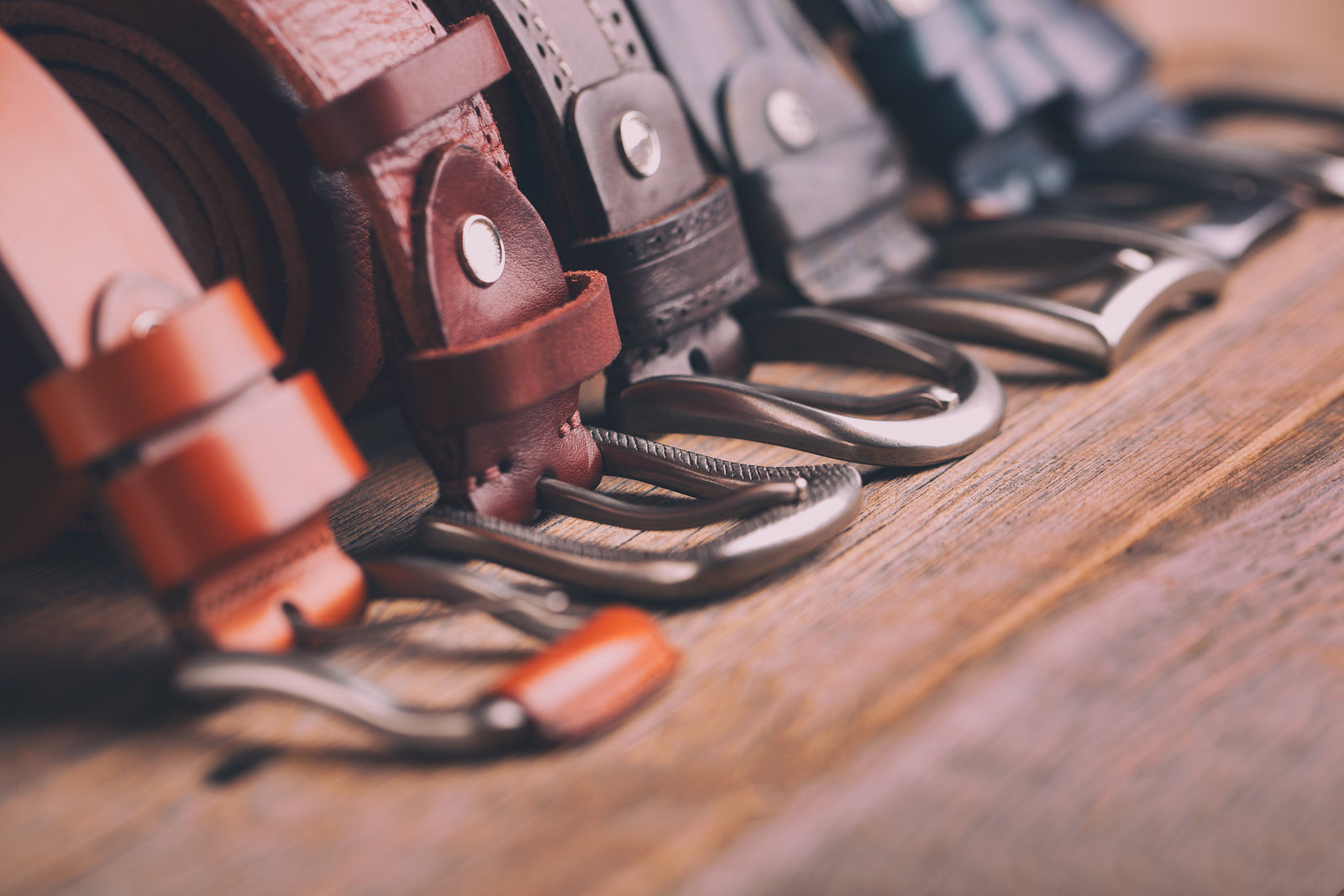
The Crazy Horse, Everyday, and Gunner are all made in the USA, use full-grain leather, and have interchangeable buckles attached with Chicago screws. Their differences make them worth comparing.
|
Feature |
Crazy Horse |
Everyday |
Gunner |
|---|---|---|---|
|
Listed Price |
$80 |
$89 |
$89 |
|
Leather |
Water Buffalo |
North American Steerhide |
North American Steerhide |
|
Approximate Leather Weight |
9 oz |
13 oz |
14 oz |
|
Approximate Thickness |
.17 Inches |
.20–.22 Inches |
.21–.23 Inches |
|
Width |
1.5 Inches |
1.5 Inches |
1.5 Inches |
|
Starting Point for Your Search |
Supple Casual Wear |
Everyday Wear and Work |
Work and Everyday Carry |
Prices are accurate at the time of writing and may change. Thickness varies naturally between hides. Leather weight in ounces is a thickness designation, not the total weight of the finished belt.
Choose the Crazy Horse for a More Relaxed Feel
At $80, the Crazy Horse is our starting suggestion when your priority is a supple belt for casual wear. Its water buffalo leather develops a distressed appearance that works especially well with worn-in denim.
Consider your taste before choosing it. If you love a belt that picks up visible character, that finish is appealing. If you want a consistently polished look, you may prefer another style.
Consider the Everyday for Added Structure
The $89 Everyday is worth a look when you want a substantial strap for daily use. It pairs full-grain steerhide with a matte black buckle and a simple appearance.
You can check the available colors and fit instructions on ourEveryday Belt product page.
We wouldn't recommend it over the Crazy Horse for every casual wearer. Start with the feel you prefer and the support your routine requires.
Compare the Gunner When Support Is a Priority
Also $89, the Gunner is positioned for work and everyday carry. Its specifications include a nickel-free stainless steel buckle, which is a relevant detail if you're comparing buckle materials.
The Everyday and Gunner are close in listed thickness, so don't expect a completely different category of belt based on that small difference alone. Look at the hardware, appearance, and intended use together.
Get the Fit Right Before You Order
A well-made belt in the wrong size can still be annoying. Too short, and you're struggling to fasten it. Too long, and you're managing a tail that reaches farther around your waist than you wanted.
The most useful starting point is a belt you already wear comfortably with the same type of pants.
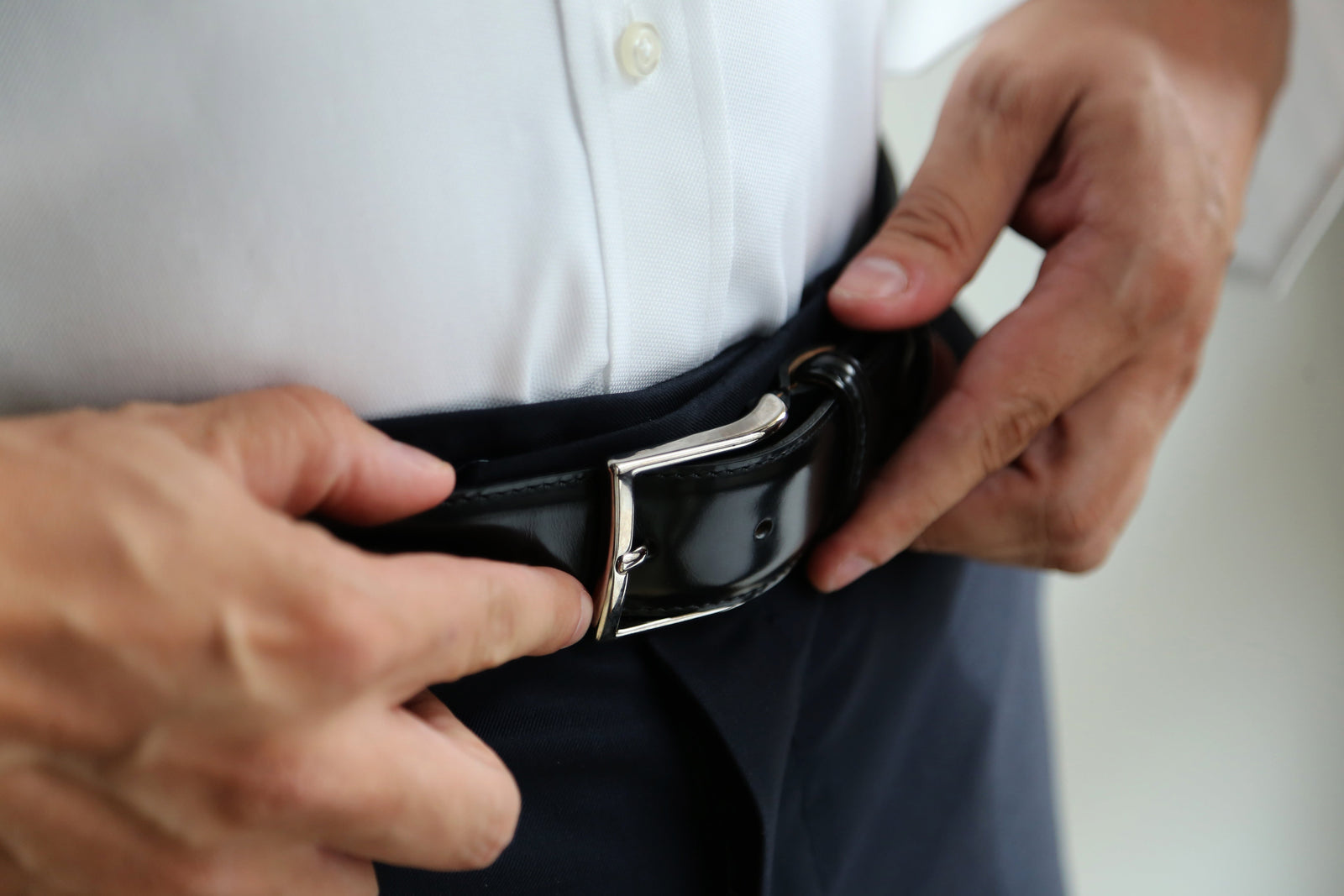
Lay it flat and measure from where the leather folds around the buckle to the hole you normally use. Don't include the buckle's length. Then compare that measurement with the sizing chart for the Hanks model you're considering.
Read the chart carefully, since hole arrangements can differ between styles. Matching the right measurement matters more than matching a number stamped on an old belt.
If you don't have a suitable belt to measure, follow the specific model's alternative sizing instructions. Avoid relying on the familiar advice to add two inches to your pants size, because that may not match the instructions for your Hanks belt.
Buying for someone else? Ask them to measure a belt they actually wear. It's a small favor that can save both of you an exchange.
Pay Attention to Comfort Beyond the Strap
Check Your Belt Loops
A 1.5-inch width is a practical place to start for many jeans and casual pants, but check your own clothing. Width isn't the only measurement that matters. A thick strap also needs enough clearance to pass through the loops comfortably.
If you're replacing a particularly thin belt, take a moment to compare the available space. You shouldn't have to wrestle your belt through your pants every morning.
Think About Sitting Down
Most of us evaluate a belt standing in front of a mirror. Then we spend much of the day sitting in it.
When you try yours on, sit normally, lean forward, and move around. Notice whether the buckle presses into your stomach or the strap feels excessively tight. Check the fit with the pants you plan to wear, rather than trying it over a completely different waistband.
Give Leather Time Without Ignoring a Poor Fit
Leather can settle into your shape through normal wear. Some initial firmness may be part of that process, especially with a substantial strap.
However, break-in isn't a reason to ignore an obvious sizing or compatibility problem. A belt that's too short won't become the correct size simply because you keep wearing it. If something seems wrong, check the measurements and contact us before making alterations.
Why Replaceable Buckles Are Important
The buckle gets handled every time you put your belt on or take it off. Being able to change that component gives you more flexibility over the belt's useful life.
Chicago screws let you open the buckle fold without cutting the strap. That can make a hardware replacement or style change much more straightforward.
Compatibility still needs checking. A replacement buckle should suit the strap width, thickness, and attachment arrangement. Matching the advertised width is a starting point, not proof that every buckle will fit equally well.
After changing hardware, make sure everything is secure before wearing the belt. Periodically checking the screws is sensible, particularly after you've taken them apart.
If you already own a favorite buckle, check its fit before placing your order. It's easier to choose a compatible belt now than to discover a mismatch after it arrives.
Know What American-Made Tells You
If buying American-made products matters to you, check the manufacturing information for the specific belt. A company's location and a product's manufacturing location aren't necessarily the same thing.
For the three models compared here, our specifications list the country of manufacture as the USA. That's a concrete detail you can check alongside the materials and dimensions.
Origin still belongs in the wider decision. You deserve a belt that fits your needs as well as your purchasing preferences. Look for both, and don't let a familiar flag graphic replace reading the actual product information.
Work Out What Good Value Means for You
A lower purchase price is useful only if the belt also does what you need. An $80 belt you enjoy wearing can be better value for you than an $89 belt whose extra structure you don't want.
Cost per wear can help put the difference in perspective. As an illustration, an $89 belt worn 250 times would cost about 36 cents per wear. That's a calculation, not a prediction of lifespan.
Warranty terms deserve the same practical attention. Our belts come with a 100-year warranty covering materials and construction under intended wear and use. That doesn't make every kind of damage a warranty issue.
Normal shaping to your body is expected. Misuse, certain accidents, and using a casual belt for equipment it isn't suited to are different matters. You can read the coverage and exclusions in our100-Year Warranty details.
Ask yourself one last question before checking out: would you still choose this belt if another model were a few dollars cheaper? If the answer is yes because it fits your routine better, you're comparing value sensibly.
Keep Everyday Care Simple
You don't need an elaborate maintenance routine, but leather benefits from a little attention. Wipe away ordinary dirt with a soft cloth and avoid leaving a damp belt in a heap.
If it gets wet, let it dry naturally away from direct heat. Don't try to hurry things along with a radiator or hair dryer.
Use a conditioner appropriate for the leather when needed, following its instructions and testing a small, discreet area first. Some products can change the color or appearance, which matters if you like the finish exactly as it is.
Before choosing, picture the belt with your usual jeans and shoes. Then check the measurements. A useful everyday belt should suit your actual wardrobe and feel right when you move, with construction you understand and a price you're comfortable paying.
Frequently Asked Questions
Can You Buy a Good American-Made Leather Belt for Under $100?
Yes. Hanks offers the Crazy Horse at $80 and the Everyday and Gunner at $89 at the time of writing. Compare their intended uses and construction before choosing. Being under budget matters, but the belt also needs to suit your clothes and routine.
Which Hanks Belt Should I Choose for Jeans?
Start with the Crazy Horse if you prefer supple leather and a distressed casual look. Compare the Everyday or Gunner if you want more structure. All three are 1.5 inches wide, so check your jeans' belt loops for both width and thickness clearance.
Is a Thicker Leather Belt Always More Comfortable?
No. Comfort depends on fit, flexibility, buckle shape, and what you're asking the belt to support. Extra thickness may suit certain uses, but someone who mainly wants a casual belt can prefer a lighter construction. Choose around your day rather than the largest specification.
Should I Order My Hanks Belt in My Pants Size?
Don't assume your pants size is the right belt size. Measure a belt that fits you comfortably, excluding the buckle, and compare the measurement with your chosen model's chart. If you can't measure an existing belt, use that model's alternative sizing instructions before ordering.
Can I Change the Buckle on These Hanks Belts?
Yes. The Crazy Horse, Everyday, and Gunner use Chicago screws and have interchangeable buckles. Check the replacement buckle against the strap's dimensions and attachment arrangement. Make sure the screws are secure after any change, and ask us about compatibility if you're unsure.