

Key Takeaways
-
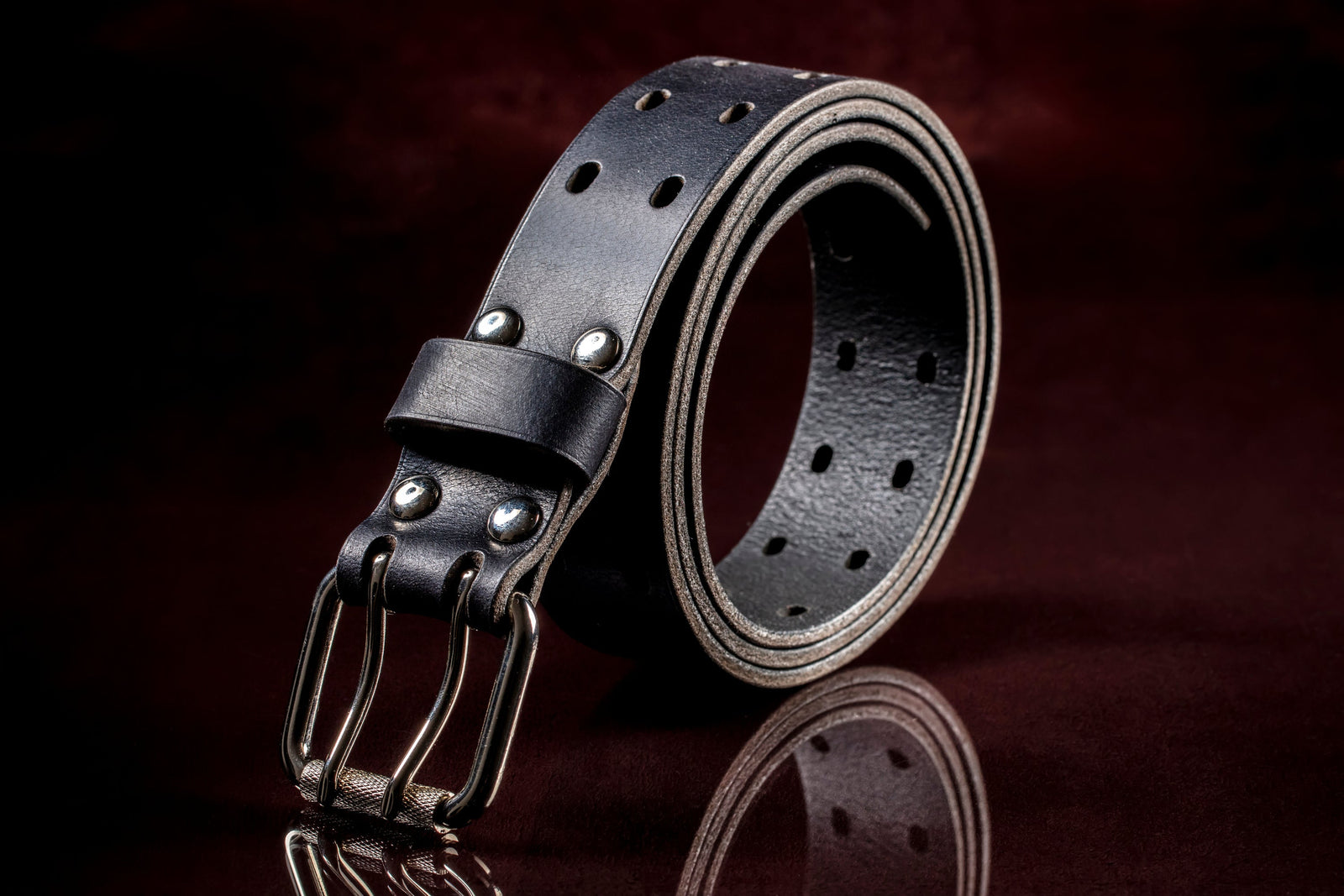
A double-prong buckle uses two prongs that fasten through matching holes in the strap. The buckle style alone doesn't tell you how substantial the belt is.
-
For casual wear, compare the Hanks Legend and Woodstock. For a heavier leather construction, consider our Double Prong Work Belt.
-
The Legend has a defined adjustment section, while the Woodstock has holes running along the strap for a more pronounced retro appearance.
-
Look at leather construction, hole spacing, buckle compatibility, and fit together. Two prongs don't automatically guarantee better comfort or carrying performance.
-
Measure for the specific model, and check the complete fastening arrangement before changing the buckle or adding holes.
Maybe you fancy the look of a double-prong buckle and want something different from your usual belt. Or perhaps you already wear one and are looking for a more substantial strap for work.
Either way, you have more than one kind of belt to consider. A casual retro design can share a similar buckle with a heavier work model, even though the leather and intended use differ.
At Hanks Belts, we'd help you make that distinction before choosing. Start with the way you plan to wear the belt, then compare how the strap and buckle work together.
Here's what to look for, including the differences between our Legend, Woodstock, and Double Prong Work Belt.
What Makes a Belt Double-Prong?
The name describes the fastening arrangement. Instead of one prong passing through a single hole, two prongs pass through a matching pair. The holes need to line up with the buckle so both prongs can seat properly.
That arrangement gives the buckle a recognizable appearance. Depending on the strap's hole pattern and the rest of the design, the belt can look understated, distinctly retro, or suited to work clothes.
Some double-prong belts have holes concentrated near the end. Others continue the pattern along much more of the strap, making the perforations part of the design even where they aren't being used for fastening.
What about a roller buckle?
A roller buckle adds another detail. The roller is the moving part at the edge where the strap passes through. It doesn't change the need to match both prongs with the correct holes.
Before buying, look at the complete belt rather than deciding from the buckle alone. This is because the same general fastening style can accompany very different leather constructions.
-
Start With Casual Wear or Work Use
One thing is sure, you'll have an easier time comparing options if you describe an ordinary day. Think about your clothes, how much time you spend sitting, and whether the belt needs to support suitable accessories.
For Casual Wear, Consider the Feel and Hole Pattern
If you're mainly holding up jeans or casual pants, focus on the look you enjoy and the amount of leather you want around your waist. A lighter construction may appeal if you don't want a particularly substantial strap.
Then decide how visible you want the hole pattern to be. A shorter adjustment section gives you more uninterrupted leather around the waist. Holes continuing along the strap make a more noticeable design feature.
You don't need to choose the more rugged option simply because both models have two prongs. Pick the construction that matches the job you actually need the belt to do.
For Work, Look Past the Fastener
When you're choosing for work, compare the strap construction and intended use alongside the buckle. A work-oriented belt can still have a retro appearance, but appearance doesn't establish its suitability for your equipment.
If you attach a sheath or other accessory, check its required belt width and thickness. A casual belt shouldn't be expected to do a heavier model's job just because the buckles look similar.
For a loaded tool pouch, the best approach is to assess the whole carrying arrangement. The number of prongs isn't a load rating, and a separate tool-carrying system may be a more appropriate choice for a heavy setup.
-
Compare Three Hanks Double-Prong Belts
The Legend, Woodstock, and Double Prong Work Belt are all made in the USA. All three list a 1.5-inch width, solid single-piece full-grain leather construction, and a double-prong roller buckle attached with Chicago screws.
Their differences are useful when narrowing your choice:
|
Model |
Main Buying Consideration |
Approximate Leather Weight |
Hole Pattern |
|
Legend |
A Casual Retro Option |
9–10 oz |
Defined Adjustment Section Near the End |
|
Woodstock |
A More Visible Retro Hole Pattern |
9–10 oz |
Holes Running Along the Strap |
|
Double Prong Work Belt |
A Heavier Leather Construction for Work Use |
14 oz |
Defined Adjustment Section Near the End |
Leather weight in ounces is a thickness designation, not the total weight of the finished belt. Natural variation occurs between hides, so use the specifications to compare constructions rather than expecting identical measurements from every strap.
The Legend for a Simpler Casual Appearance
Consider the Legend if you like the double-prong buckle but prefer a less extensive hole pattern. We position it for everyday casual wear, including jeans and khakis.
It's a sensible place to begin when the buckle is the feature you want to change. You can keep a familiar casual belt appearance while adding the paired fastening detail.
Look at the available color and finish in the product photographs. Your preference between casual models may come down to how much uninterrupted leather you want visible around your waist.
The Woodstock When the Holes Are Part of the Look
The Woodstock takes the retro appearance further by extending the holes along the strap. That makes the pattern visible beyond the usual fastening area.
It offers more potential fastening positions along the leather, but the positions still follow the hole spacing. It isn't continuously adjustable, and the extra holes don't replace choosing the correct overall size.
Feel free to explore the photographs and fit information on ourWoodstock Double-Prong Belt page if that extended pattern is what appeals to you.
The Double Prong Work Belt for More Substantial Leather
Our work model uses approximately 14 oz full-grain steerhide, making it the heavier leather construction in this comparison. It pairs that strap with a steel double-prong roller buckle.
Consider it when you want a work-oriented belt and specifically prefer this fastening style. Compare its dimensions with your clothing and any equipment attachments before choosing.
The extra leather is a practical difference to evaluate. It doesn't mean everyone will find it more comfortable, or that it will suit every load you might attach.
-
Understand What Two Prongs Do and Don't Tell You
It's tempting to assume that twice as many prongs means twice the strength. Well, we wouldn't choose a belt on that assumption.
Two prongs describe how the buckle engages with the strap. They don't establish the strength of the leather, the quality of the hardware, or a tested carrying capacity. Those depend on the actual product and its construction.
The same applies to comfort. Some people simply prefer the appearance and fastening feel. Others may find a different buckle shape more convenient. There's no need to turn that preference into a universal claim.
If you're happy with a single-prong belt and only want to try a different look, compare the new model's strap and buckle dimensions with what you already wear. You may be changing more than the number of prongs.
For work, choose using the belt's intended purpose and your equipment requirements. A buckle comparison alone can't answer that decision.
-
Pay Attention to Hole Spacing and Usable Adjustment
Hole spacing affects where you can fasten the belt. A long row of holes gives you a different range of possible positions from a short adjustment section, but it doesn't necessarily give you smaller steps between positions.
The Woodstock, for example, lists holes spaced one inch on center along the strap. The Legend also lists one-inch spacing in its adjustment section. The extended pattern changes the available range and appearance, rather than automatically creating finer adjustment.
That's worth understanding if you're attracted to the Woodstock because your size changes. It may offer useful options, but you'll still need the strap length and fastening position to suit you. Too much loose end can be inconvenient even when you can buckle the belt!
With a double-prong buckle, always assess the matching holes together. Both prongs should sit in the intended pair without pulling the strap sideways to make them engage.
If the fastening arrangement seems misaligned, ask us about it before modifying anything. Adding or enlarging holes can create another problem instead of resolving an incorrect fit.
-
Get the Size Right for the Model You Choose
What does a good fit begin with? It begins with the specific product's instructions.
Don't assume that your pants size, a size printed on another belt, or advice for a different Hanks model will give you the same result.
If you have a belt that fits comfortably, lay it flat and measure from where the leather folds around the buckle to the fastening hole you normally use. Leave the buckle's length out of that measurement, then compare it with the chosen model's chart.
For an existing double-prong belt, note the paired holes you use. Read the new model's diagram carefully so you're comparing the same measurement points.
What if you don't have a reliable belt to measure?
If you don't have a reliable belt to measure, use the model's alternative instructions and tell us how you plan to wear it. The work model provides different sizing guidance for ordinary wear and for carrying items, so that detail matters.
Avoid adding several allowances from different guides. Work from one set of instructions and keep your measurements clear. You want useful adjustment room without buying unnecessary length.
-
Try the Buckle With Your Normal Clothes
You handle the buckle every time you put your belt on or take it off. Give that part of the choice a little attention before deciding whether the new style suits you.
Check it with the pants you expect to wear most. The strap needs enough clearance through the loops, and the buckle should sit comfortably when you move from standing to sitting.
Try these checks before making permanent changes:
-
Check the fastening. Confirm that both prongs seat in matching holes without forcing the leather sideways.
-
Check the overlap. Make sure the loose end passes through the keeper and sits neatly with your pants.
-
Sit and move. Notice whether the buckle presses into you or whether the fit needs a reasonable adjustment.
-
Check your routine. Make sure fastening and unfastening the belt feels manageable for daily use.
Some initial firmness can be part of wearing substantial leather. That is different from a buckle or strap that doesn't fit your clothing properly.
You shouldn't have to wait for break-in to correct an obvious sizing or compatibility problem.
-
Check Compatibility Before Replacing the Buckle
Chicago screw construction makes the buckles on these models interchangeable, provided the replacement is compatible. That gives you options if you need replacement hardware or want a different appearance later.
-
Width is only the beginning of the check. A double-prong replacement also needs the right distance between its prongs and the correct relationship to the strap's paired holes.
-
The thickness at the buckle fold, the hardware attachment, and the replacement's shape matter too. A buckle advertised for the same strap width isn't automatically a complete match.
If you want to switch to a single-prong buckle, ask about the exact combination first. The existing hole layout may not line up with its prong. Being able to remove a buckle doesn't establish that every alternative will work.
After changing hardware, make sure the screws are secure. Keep the original components until you've confirmed that the replacement fits and functions correctly.
-
Choose the Construction You'll Enjoy Wearing
Bring the decision back to the reason you started shopping. What does that mean?
If you want a casual retro belt with a shorter hole pattern, begin with the Legend. If you want holes running along the strap, compare the Woodstock. For a heavier work-oriented construction, look at the Double Prong Work Belt.
Take a closer look at the dimensions and fit instructions on our Double Prong Work Belt page if work use is your priority.
Read the materials and construction information alongside the appearance. The two casual options and the heavier work model share a general buckle style, but that doesn't make them interchangeable for every purpose.
Our belts come with a 100-year warranty covering materials and construction under intended wear and use, with some exclusions of course. Normal leather shaping and cosmetic wear on hardware are different from a covered failure. Check with us before altering the strap if you're unsure how a change affects coverage.
Once you've chosen the appropriate construction, let personal preference finish the decision. The best double-prong leather belt for you should fit your day and feel comfortable to fasten, with a design you'll want to wear again tomorrow.
Frequently Asked Questions
Which Hanks Double-Prong Belt Should I Choose?
Start with the Legend for casual wear with a defined adjustment section, or the Woodstock if you prefer holes extending along the strap. Consider the Double Prong Work Belt for a heavier leather construction. Compare the specific model's dimensions, intended use, and sizing guidance before ordering.
Are Double-Prong Belts Stronger Than Single-Prong Belts?
The number of prongs alone doesn't establish strength or carrying capacity. Leather construction, hardware, attachment, and intended use all matter. Choose the complete belt for your needs rather than assuming two prongs automatically outperform one. Comfort and appearance are also valid reasons to prefer a particular buckle.
Does the Woodstock Give You Smaller Adjustment Steps?
Its holes extend along the strap, providing more potential positions and a distinctive retro appearance. The published spacing is one inch on center, so the extended pattern doesn't make adjustment continuous. You still need the correct belt size and a manageable amount of loose strap after fastening.
Can I Use a Casual Double-Prong Belt for Work?
It depends on what work requires. A casual belt may suit a day when it simply holds up your pants. If you attach equipment or need a more substantial strap, compare a work-oriented construction and verify attachment compatibility. The buckle style alone doesn't determine suitability.
Can I Swap Any Double-Prong Buckle Onto My Belt?
No. The replacement must match the strap width, thickness, attachment arrangement, and spacing of the paired holes. Even two buckles advertised for the same width may differ in other dimensions. Ask us about your exact belt and proposed replacement if you're unsure about the fit.