

Key Takeaways
-
A steel-core leather gun belt places reinforcement between leather layers to help resist folding and sagging under its intended load.
-
The Hanks Steel Core is a substantial 1.5-inch option. Daltech Force also offers steel-core models with different widths, finishes, and adjustment spacing.
-
Published thickness is especially important. A reinforced belt must fit your clothing and holster attachments, including the clearance needed to fasten them.
-
Added stiffness can bring useful support, but comfort still depends on the complete belt, its fit, and your daily routine.
-
Order carefully and leave the core intact. Punching holes through a Hanks belt's steel core voids its warranty.
Steel inside a leather belt sounds like a straightforward upgrade. If your current belt folds over or loses its shape under a holster, extra reinforcement can certainly be appealing.
But here’s the hard question: how much belt will you actually enjoy wearing?
A thick reinforced strap can feel quite different from the leather belt already in your closet. Its adjustment spacing, buckle, and compatibility with your attachments deserve as much attention as the material hidden inside.
At Hanks Belts, we make our Steel Core for people who want a particularly substantial construction.
We'll explain what that involves and how it compares with two Daltech Force alternatives.
What the Steel Core Adds
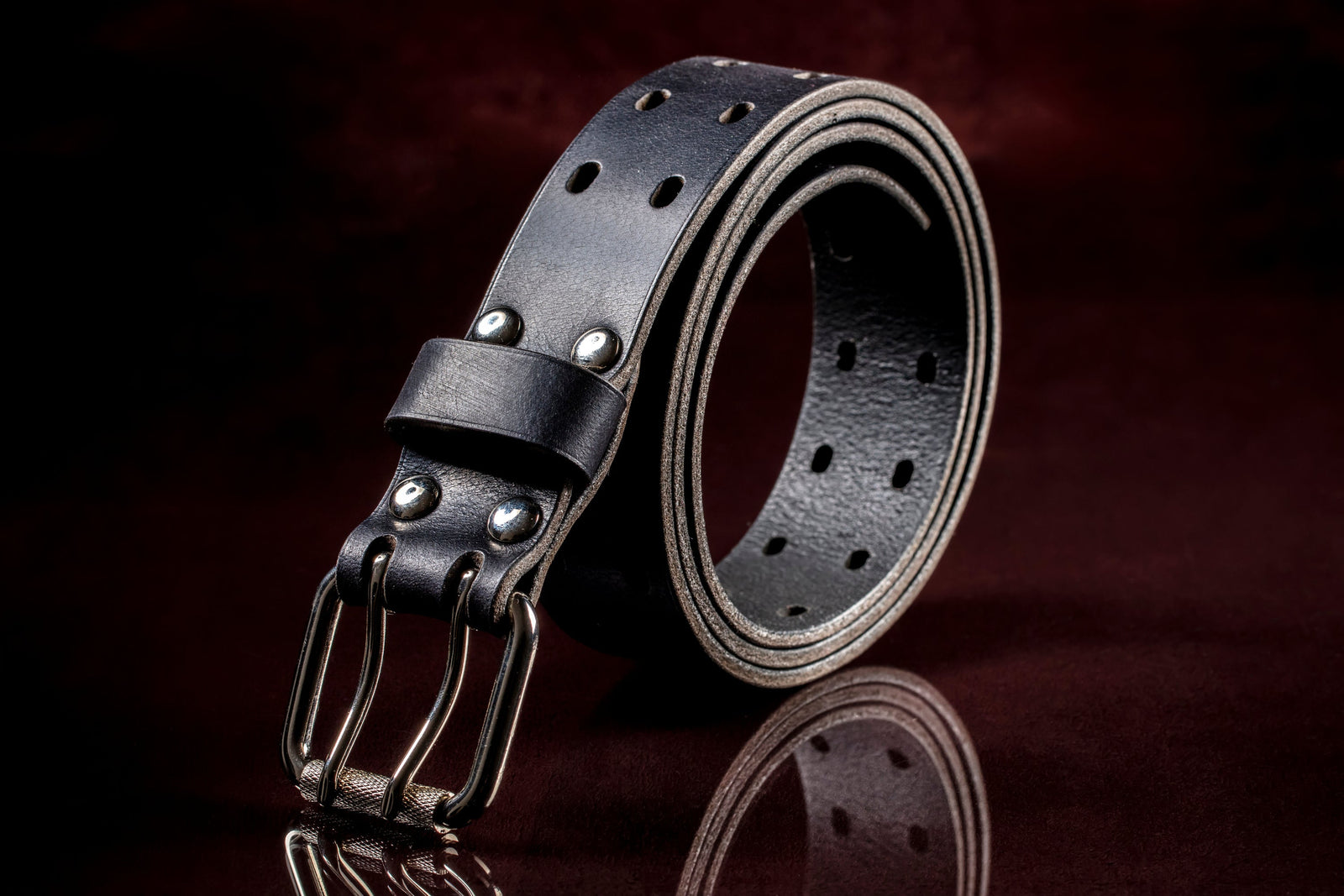
In this type of belt, a steel insert sits between leather layers. The reinforcement helps the strap resist folding across its width, where a belt may otherwise collapse under an attached load.
You'll sometimes see the construction described as three layers: leather, steel, and leather. That tells you the basic arrangement. It doesn't tell you the finished thickness, the dimensions of the insert, or how the belt will feel around your body.
It’s not a good idea to ignore those details because two products carrying the same steel-core label can have quite different designs. One may prioritize a thick harness leather build. Another may use a narrower strap intended to fit dress clothing.
Another thing. Distinguish resistance to folding from the ability to curve around your waist. A useful belt needs to support its intended equipment while still following your body. Rigidity in every direction isn't a comfort feature by itself.
If a product description doesn't explain its reinforcement, ask the manufacturer. The words heavy duty, reinforced, or gun belt don't necessarily mean that the belt contains steel.
Three Steel-Core Leather Belts Worth Comparing
For this guide, we're looking at theHanks Steel Core in 1.5 inches, theDaltech Force Distressed Bison Steel Core EDC BullBelt, andDaltech Force's Italian Leather Steel Core EDC Holster Belt.
The product listings identify all three models as made in the USA. Their published differences give you useful buying criteria, especially if you're deciding between a substantial everyday strap and a narrower dress-oriented design.
|
Model |
Width |
Published Construction |
Adjustment Pattern |
|
Hanks Steel Core |
1.5 Inches |
Two Full-Grain Harness Leather Layers With Steel Between Them; Approximately .37 Inches Thick |
Six Holes, 1 Inch Apart |
|
Daltech Force Distressed Bison Steel Core EDC BullBelt |
1.5 Inches |
American Bison Leather With a Steel Core; Approximately 1/4 Inch or More Thick |
Nine Holes, 3/4 Inch Apart |
|
Daltech Force Italian Leather Steel Core EDC Holster Belt |
1.25 Inches |
Italian Leather With Steel Reinforcement and Cowhide Backing |
Nine Holes, 3/4 Inch Apart |
Keep in mind that these are product specifications, not a ranking of measured strength or comfort. Natural leather dimensions can vary, and you should confirm the exact version you're ordering.
-
Hanks Steel Core for a Substantial Harness Leather Build
Our model combines two layers of full-grain harness leather with its internal steel insert. We list it at approximately 20 oz leather weight and .37 inches thick. It uses a roller buckle secured by Chicago screws, allowing a compatible replacement.
We also tell you plainly that this is a very stiff belt. Buckling it and feeding the end through the keeper can take more effort when it's new, with break-in expected over the following weeks.
That makes it a candidate for someone who specifically wants this construction and accepts the initial firmness. If minimal bulk is your priority, its dimensions deserve careful consideration before you order.
Get the full specifications and size chart on ourHanks Steel Core Gun Belt page before deciding whether this build suits you.
-
Daltech Force Bison for a Distressed Finish
Daltech's bison model puts a rugged surface on a 1.5-inch steel-core belt. The company specifies heavy-duty nylon stitching, an antiqued roller buckle, and Chicago screws for changing the buckle.
Its listed thickness is approximately one-quarter inch or more. That wording gives you a starting point, but it isn't a precise maximum measurement for attachment clearance.
We'd include this model in your research if you want bison leather and a distressed appearance. Ask Daltech for further dimensional guidance if your holster attachment has limited room. The finish alone doesn't establish how comfortable the finished belt will feel.
-
Daltech Force Italian Leather for a Narrower Dress Profile
Daltech positions its Italian leather model as a dress belt with steel reinforcement. At 1.25 inches wide, it offers a narrower alternative to the two other models here.
The published details include cowhide backing and Chicago screw attachment for a changeable buckle. It also provides three-quarter-inch adjustment spacing, matching the spacing listed for Daltech's bison model.
Its narrower width may suit clothing with smaller loops, provided your holster attachments are compatible. Don't treat a dress-oriented appearance as proof of a thin finished strap. Obtain that measurement if your equipment requires it.
Read Thickness and Leather Weight Separately
The first thing you need to know is that a leather weight written in ounces isn't the weight you'll feel on a scale when you pick up the finished belt. In leather specifications, ounces are used to describe thickness.
And with layered products, you need extra care when you're comparing those numbers.
The listing may be referring to the leather construction rather than giving you a complete measurement of the leather and internal reinforcement together.
For attachment compatibility, the finished thickness in inches or millimeters is the more useful figure. If that measurement isn't published, request it. Avoid converting a leather weight into an assumed finished thickness for a reinforced belt.
Likewise, an approximate measurement shouldn't be treated as an exact manufacturing tolerance. Leather is a natural material, and the folded area near the buckle is different from a single section of the strap.
Here’s your practical question:
Does the belt pass through the intended openings and lets the attachment close correctly? A few extra fractions of an inch can matter when the available clearance is already tight.
Decide Whether Added Stiffness Solves Your Problem
Before choosing steel, identify what your existing belt does poorly.
Does the strap fold near an attachment? Does the whole waistband sag?
Is the buckle uncomfortable?
These problems don't necessarily share the same solution.
If the strap itself collapses under equipment it's expected to support, reinforcement may address that weakness. If the belt is simply too loose, or the attachment isn't suitable for its width, extra stiffness won't correct the mismatch.
You may also discover that a purpose-built leather gun belt without steel meets your needs. OurXtreme, for example, uses substantial single-piece full-grain leather rather than an internal steel core. It belongs in a different construction category, even though it's designed for carry use.
We wouldn't tell you to choose the stiffest belt available solely because it sounds reassuring. The useful upgrade is the one that addresses your actual difficulty and remains comfortable enough for regular wear.
Manufacturer descriptions can help you narrow the options, but they don't replace evaluating the complete combination. A positive review from someone using different clothing and equipment won't answer every fit question for you.
Give Attachment Clearance Its Own Check
Width and thickness are separate compatibility questions. An attachment designed around a 1.5-inch belt may have more movement on a narrower strap. A thicker strap may prevent a clip or loop from engaging as intended.
The best thing you can do is refer to the attachment manufacturer's specifications, including any limits on belt thickness. If the information only gives a width, ask about clearance before buying a particularly substantial belt.
Don't force a clip over leather that exceeds its intended dimensions. A fastening that appears closed under pressure may not be working correctly, and forcing the fit can damage the attachment or the strap.
When comparing these three models, the narrower Italian leather design offers a different width choice. The two 1.5-inch models still need individual thickness checks because sharing a nominal width doesn't make their complete dimensions equivalent.
This is also why changing only one part of an existing setup can have unexpected effects. Make sure to keep the specifications of your current belt and attachments handy so you can identify what the replacement changes.
Adjustment Spacing Can Affect Your Comfort
With a conventional buckle, you're choosing among fixed fastening positions. Their spacing determines the size of each adjustment, while the number of holes and overall strap length determine the available range.
The table provided earlier in this article shows the difference: the Hanks model lists one-inch hole spacing, while the two Daltech models list three-quarter-inch spacing. The latter offers smaller steps between adjacent positions.
When do smaller steps make sense?
Smaller steps may be useful if you often find yourself between two comfortable settings. They don't guarantee a better fit for everyone, and more holes won't compensate for ordering the wrong length.
Think about your ordinary day as well. A setting that feels comfortable while standing may feel different after you've sat at a desk or in a vehicle. Clothing layers can change the available room too.
Consider the adjustment pattern before purchase. With a reinforced belt, adding holes afterward isn't a sensible substitute for choosing a suitable size and fastening arrangement.
Measure for the Belt You're Actually Ordering
Different brands can label their belts differently, so an existing size number isn't a reliable conversion between them. That’s why you should use the selected manufacturer's sizing method from beginning to end.
For Hanks, the measurement charts begin where the leather folds around the buckle and exclude the buckle's length. Compare the relevant hole measurement, then consult the instructions for the specific belt.
Are you sizing for ordinary wear or for equipment worn inside the waistband? That can affect the room you need. Avoid adding several guessed allowances to a measurement that's already been taken for that purpose.
If you are close to the end of a size range, ask for help before ordering. The aim is to have usable fastening positions in both directions rather than needing the first or last hole immediately.
A correctly chosen length also makes everyday handling easier. You need enough overlap for the keeper without an unnecessarily long end that is awkward to thread through a thick fastening area.
Expect Support and Flexibility to Feel Different
Even when you've chosen the correct size, a reinforced belt may feel unfamiliar. You can appreciate the additional structure and still notice more resistance while fastening it or settling into a chair.
Allow for the break-in described by the manufacturer, but keep reasonable expectations.
-
Leather can conform with use.
-
An internal steel insert remains part of the construction.
-
Break-in won't turn the belt into a soft unreinforced strap.
Nor will it correct incompatible attachments, inadequate length, or a buckle that presses painfully into you. Those are reasons to reassess the fit rather than simply wait longer.
Before making permanent alterations, evaluate the belt within the seller's return and exchange conditions. Normal movement and sitting can tell you a great deal about whether its structure suits your routine. You don't need to treat discomfort as proof that the belt is doing its job.
Protect the Core and Understand the Warranty
Reinforced construction changes what you should do when a belt needs attention. Leave the insert intact and ask the manufacturer before trimming, punching, or otherwise modifying the strap.
Our warranty specifically states that punching holes through a steel core voids coverage and compromises the belt's structural integrity. If you need a different fastening position, contact us about the fit instead of reaching for a punch.
The Hanks 100-year warranty covers materials and construction under intended wear and use, subject to its terms. Normal body shaping and cosmetic wear on hardware are different from a covered failure. Water damage and misuse also have exclusions.
Read our100-Year Warranty details if you're considering a reinforced model. Knowing the terms helps you choose and care for the belt with fewer surprises.
Make the Choice From Your Requirements
Write down the few details that would rule a belt in or out before comparing descriptions:
-
Required dimensions. Note the width and thickness your clothing and attachments accept.
-
Preferred adjustment. Decide whether smaller steps between fastening positions matter to you.
-
Tolerance for firmness. Be realistic about buckling effort and how long you spend seated.
-
Construction preference. Identify whether you specifically want steel reinforcement or simply need a supportive leather belt.
For a substantial harness leather build, our Steel Core deserves consideration. A distressed bison finish or narrower dress profile may lead you toward one of the Daltech models discussed here. Choose on those concrete differences, then confirm the sizing and current specifications with the seller.
Frequently Asked Questions
What Are the Best Steel-Core Leather Gun Belts?
Useful options to research include the Hanks Steel Core, Daltech Force's Distressed Bison Steel Core EDC BullBelt, and its Italian Leather Steel Core EDC Holster Belt. They serve different preferences in construction, width, and adjustment. There isn't a universal winner without considering your attachment requirements and comfort.
Is a Steel-Core Belt Always Better Than an All-Leather Gun Belt?
No. Steel reinforcement can help resist folding, but it also changes the feel and handling of the belt. A purpose-built all-leather model may provide the support you need. Consider the problem you're trying to solve, compatibility, and everyday comfort before choosing a construction.
Will a Thick Steel-Core Belt Fit My Holster Clips?
Check the clip manufacturer's width and thickness requirements. A nominal width match doesn't establish enough clearance for a substantial strap. If maximum thickness isn't stated, request guidance from the maker. Avoid forcing an attachment closed over a belt it wasn't designed to accommodate.
Does a Steel-Core Leather Belt Need to Break In?
Some do. Hanks specifically describes an initial break-in period for its Steel Core, including greater effort when buckling and using the keeper. Follow the manufacturer's guidance. Expect some change in the leather's feel, while remembering that the internal reinforcement remains and compatibility problems need separate attention.
Can I Add Holes to My Hanks Steel-Core Belt?
Punching through the steel core voids the Hanks warranty and compromises the construction. Contact us if the existing adjustment positions don't suit you. Confirming the correct size or arranging an appropriate exchange is preferable to permanently modifying a reinforced strap to compensate for poor fit.